
Equilibrio Advisory is approved and empanelled by the Ministry of Women and Child Development to provide POSH training.
HomeOur Story
Our Story
The EA Story
Our journey
began in 2016.
Our journey began in 2016.
Our partners and co-founders Samriti and Sana came together with a shared vision of building equitable & safe spaces at work.
Our partners and co-founders Samriti and Sana came together with a shared vision of building equitable & safe spaces at work.
We built Equilibrio on a conviction that was uncommon in 2016 and remains uncommon today: law without psychology produces compliance without change. Psychology without law produces empathy without accountability. Real safety needed both. So that is what we built together, from day one were already deeply established in their fields:
Samriti as a practising psychologist with years of frontline experience in workplace trauma, abuse, and psychosocial intervention;
Sana as a seasoned litigation counsel at the Bombay High Court, with a practice built on the most complex cases of sexual harassment, child abuse, and domestic violence. What they recognised, from that depth of experience, was that neither discipline, however well-practised, could do this work completely alone.
Harassment and abuse are never just legal events or just psychological ones; they sit at the intersection of both. Working in silos meant always seeing half the picture. Together, they could build something more holistic; one that held the law and the person in the same frame.
– Samriti and Sana

The Beginning: About The Founders
Two disciplines. Two experience rich journeys.
Blending together to bridging the gaps in Law - Policy - Practice
Psychologist & Psychotherapist
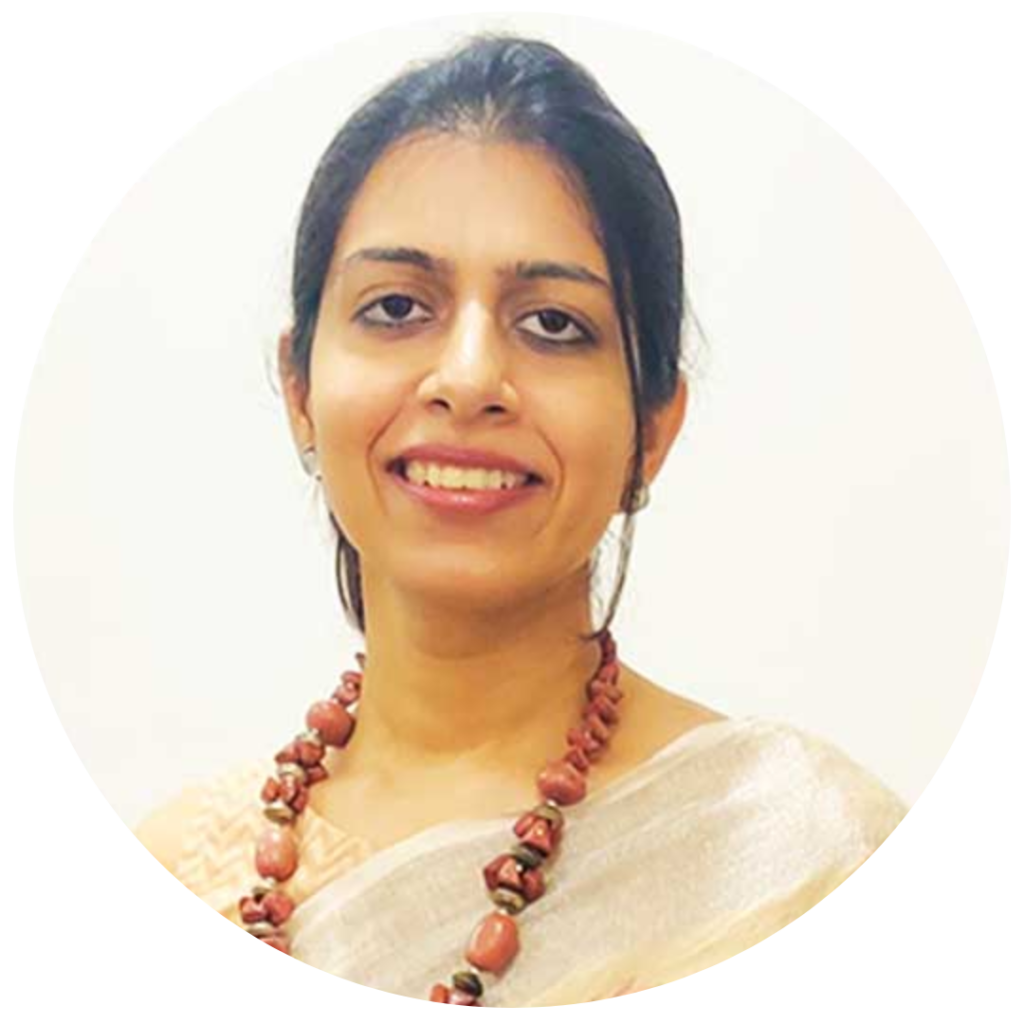
Samriti Makkar Midha (She/Her)
Psychologist & Psychotherapist Psychologist & Psychotherapist anchored the psychosocial nuances key to effective implementation.
“I could hold the room after a disclosure. I understood the ground realities; the power plays, the guilt a complainant carries, what it takes for someone to speak at all. But I couldn’t read a judgment. I didn’t know how the legal machinery worked, or how to build an inquiry report that would stand up in court. The law and the person in front of me needed each other. So did Sana and I.”
What Samriti brought to the space was a socio-clinical understanding of how abuse and violence actually operate: the power dynamics, the social narratives we are raised in, factors that keep people from speaking out, the layers of vulnerability and their intersection and the casual sexism so normalised it goes unnamed.
She understood why a complainant internalises guilt. Why suicidal ideation can follow a disclosure. Why the same incident lands differently depending on who is in the room and what they have been taught to believe about themselves.
Her practice spans CBT, Narrative Therapy, and Queer Affirmative Therapy. She works at the individual level with people in crisis and at the system level, rebuilding team cultures and reshaping policy after difficult events.
Counsel, Bombay High Court

Adv. Sana Hakim
Counsel, Bombay High Court held the legal knowledge and expertise when it came to legal protection of vulnerable groups.
“I knew how to protect the law’s most vulnerable subjects on paper the right clause, the right precedent, the right procedure. What I didn’t always know how to do was reach the person sitting across from me or see past the resolution of a case to what came after: a team that still had to work together, a culture that had to learn and shift because of what happened. That’s where Samriti’s expertise comes in.”
Sana brings 13+ years of litigation practice at the Bombay High Court, across matters of sexual harassment, child sexual abuse, domestic violence, and transgender rights.
She knows how and why inquiry processes may fail in court during appeal, what statutory compliance actually requires, and how legal frameworks can be used not just for redressal but to shift the structural conditions that produce harm in the first place.
At the Firm, she co-builds the frameworks within which Equilibrio Advisory LLP’s work is designed – ensuring that what is psychologically sound is also legally defensible, and that what is legally required is implemented in ways that do not cause additional harm to those it is meant to protect.
When Samriti and Sana began working together in December 2016, they were, to their knowledge, the first firm in India to formally integrate psychology and law into a single practice. The need was visible to both of them from their respective sides. They decided to meet in the middle and create sustainable, unique approaches to workplace safety starting with POSH Law.
Our Journey
Active years: 10 Years | December 2026 = Current
100+ years cumulative experience.
Our goal was always clear: co-create safe workspaces for everyone. What we didn’t anticipate was how that single goal would grow into four distinct, interconnected practice areas.
Each vertical was built from the ground up – shaped by what we encountered in the field, not by what we planned in advance. We kept running into the same pattern: a gap between what the law required and what people actually needed, communities that were vulnerable and marginalized, crises that organisations had no real way to respond to. Every vertical exists because that gap was real, and someone had to close it.
Each vertical was built from the ground up – shaped by what we encountered in the field, not by what we planned in advance. We kept running into the same pattern: a gap between what the law required and what people actually needed, communities that were vulnerable and marginalized, crises that organisations had no real way to respond to. Every vertical exists because that gap was real, and someone had to close it.
The law told organisations what they must do. They needed support to understand why it mattered and what it cost, in human terms, when it failed.
📍 December 2016: The beginning
The POSH Act had been law since 2013. Three years on, almost nobody was actually doing the work it required – organisations didn’t know where to start, and there were very few people equipped to help them. Samriti and Sana were among the first.
That early timing meant there was no playbook to follow. They were figuring out, case by case, what a fair inquiry looked like, what training actually changed behaviour, and what an organisation needed beyond a policy document on a shelf. The law had existed for three years. The practice of implementing it well was just beginning.
That early timing meant there was no playbook to follow. They were figuring out, case by case, what a fair inquiry looked like, what training actually changed behaviour, and what an organisation needed beyond a policy document on a shelf. The law had existed for three years. The practice of implementing it well was just beginning.
Read more
Our first step was within the space of the POSH Act. The POSH Act was in force. Organisations were ticking boxes. People were still not feeling safe to file complaints, processes seemed to contribute to distress.
So we began with a focus on bringing an intersectional approach and focus to the Sexual Harassment of Women at Workplace (Prevention, Prohibition and Redressal) Act, 2013 (POSH Law). This Law gave India a legal framework and the key compliances, processes and procedures required to ensure that women at work are protected from sexual harassment through healthy work environments.
However through implementation- challenges, grey areas and dilemmas emerged.
What it could not give organisations was the capacity to implement it well to conduct inquiries that were fair, to respond to complaints without causing secondary harm, to build cultures where reporting felt possible in the first place.
That gap between legal obligation and human reality, is where Equilibrio began. We brought a litigation lawyer and a psychologist into the same room, and treated every POSH engagement as both a legal matter and a psychosocial one. That integration was uncommon then. It remains our core.
📍 16 February 2017: A pivotal early validation.
Empanelled with the Ministry of Women and Child Development (MWCD) for POSH, establishing credibility and laying the groundwork for impact at scale.
📍 2019: Growth beyond borders.
Onboarding freelancers across the country to offer services pan-India, meeting organisations wherever they are.
📍 2020: A deliberate deepening of commitment.
Transitioning from freelancers to full-time consultants, formalising the internal structure and sustaining the dedicated ownership that meaningful work demands.
📍 22 December 2021: A landmark moment.
Equilibrio Advisory LLP is established as an umbrella brand, bringing together years of learning, practice, and purpose under one unified identity; a platform for legal remedies, psychological interventions, and capacity building, all in service of fostering equitable and safe spaces for all people.
📍 2022: Expansion of expertise and intervention points
In the space of eighteen months, three new verticals launched. Not from a strategy document, but from what the work kept revealing.
Read more
1. Jan 2022: Expanding the circle of safety to include young people. The Child Safety at Work (CSAW) vertical is formalised through active engagement with schools, creating space to equip stakeholders to recognise, respond to, and address harm early.
POSH is applicable to schools in terms of workplace safety. Our school clients came to us for POSH compliance.
Once the work was underway, they began asking: what about the children, who are a more vulnerable community?
The POSH Act addresses adults in the workplace. POCSO (the Protection of Children from Sexual Offences Act , 2012) protects children, but few organisations / institutions were aware of the legal and psychosocial nuances required to effectively operationalise it. Fewer still understood the intersection of both laws within the same institution.
Child Safety at Work was created to serve that gap. It required us to deepen our understanding of child development, trauma in young people, age-appropriate disclosure processes, and the particular dynamics of child sexual abuse: where the perpetrator is often known, and where silence is a survival strategy, not a sign that nothing happened. None of that comes from a legal textbook / Bare Act. We had to build it ourselves, case by case..
2. Mar 2022: Marking Inclusion Awareness Week, Equilibrio formalises the Inclusion at Work vertical, creating space to spotlight DEIB, allyship, and their impact on workplace wellbeing. Anchored in the lived experiences of marginalised communities, it sustains focus on the intersectional realities that shape who feels safe, seen, and included at work.
Through our intervention points with various organisations across industries we began to see more clearly that prevention of sexual harassment at work only works if marginalised people can access it.
We kept meeting people for whom the existing frameworks simply did not account.
The more deeply we worked in the POSH space, the more visible a pattern became: the people most at risk of harassment and discrimination in workplaces like LGBTQIA+ individuals, persons with disabilities, transgender employees & more were also the people least likely to find the existing redressal systems accessible or trustworthy. For POSH frameworks to work for everyone, the conditions of inclusion had to exist first.
Inclusion at Work grew from that recognition. We understood that marginalised communities face forms of bullying, harassment, and discrimination that require a specific lens, one that understands lived experience, not just legal categories. The Transgender Persons (Protection of Rights) Act 2019, the HIV & AIDS Prevention and Control Act 2017, the Rights of Persons with Disabilities Act, 2016 & the Maternity Benefit Act, 1961 (as amended in 2017)are not peripheral laws. They contain the legal architecture within which effective policy and practice must be located to build truly safe workspaces. Knowing them, and building compliance and culture around them, became integral to the practice.
3. Apr 2022: At the cusp of Sexual Assault Awareness Month & Mental Health Awareness Month we formalised a trauma-informed approach through our Mental Health at Work vertical.
MHAW holds space for the psychosocial realities that compliance frameworks alone cannot address. Discrimination and abuse cause trauma. The work was always here.
And then COVID arrived and the spotlight came to wellbeing; grief, confusion, loss.
Managers who had no training in psychological support were suddenly first responders. Leadership who had never considered wellbeing as a business priority were watching their teams struggle and not knowing what to do.
Organisations were confronted with their employees’ full humanity – with wellbeing becoming a necessary part of the workplace. This period also brought about large rapid changes to workplace routine and blurred the lines between home and work, making balance key.
Mental Health at Work rose as a response to deep distress that emerged at this time, refusing to be ignored.
Every vertical we built is, at its root, a response to harm. Harassment causes trauma. Discrimination causes trauma. Witnessing abuse causes trauma. The psychosocial thread ran through all of it from the beginning itself, in how we designed trainings, conducted inquiries, supported complainants, and rebuilt teams. Mental Health at Work made that thread explicit and gave it its own home.
Mental Health at Work emerged as a space for individuals, for managers, for leaders, and for organisations trying to build cultures where psychological safety & wellbeing is not a poster on the wall.
📍 6th October 2022: strengthening systems and aligning with global data security practices.
- EU GDPR Certification
- ISO/IEC 27001:2013 Certification
📍 June 2023: Reframing, Re-imagining
The launch of POSHequili, a bold step in reframing the conversation. Recognising that sexual harassment is not gender-specific, this vertical expands the scope of protection and allyship. The Q spotlighted in the logo is a deliberate acknowledgement of the queer community and a signal that this work creates space for everyone.
Read more
A new name, a fresh vision. The same work, deepened. A recognition that prevention of sexual harassment must cover all marginalisations.
The practice that started in 2016 became its own vertical with a distinct identity that reflects how far the work had grown.
After years of building our POSH practice under the Equilibrio Advisory umbrella, we formalised it as POSHequili a vertical with its own identity, its own presence, and its own expanding range of services. The name change was not a pivot. It was a recognition that the work had evolved into something comprehensive enough to deserve its own home: a full-service practice spanning compliance, training, inquiry support, eLearning, and culture building, rooted in the same legal-psychological integration that has defined Equilibrio from the start.
📍 June 2023: Reframing, Re-imagining
Recommitting to global protection standards when it comes to your private health information through achieving our HIPAA Certification. A big step forward for our EAP services under Mental Health at Work.
📍 2025: Equilibrio Advisory LLP empanneled with the Ministry of Women and Child Development
📍 22nd September 2025:
Recommitting to global protection standards when it comes to your private health information through achieving our HIPAA Certification. A big step forward for our EAP services under Mental Health at Work.
📍 June 2026: Member of CII
📍 Current status: Growing and thriving…
A diverse 20-member team with intersectional experience, that’s constantly evolving!
Dec 2016
POSHequili
Where we began — workplace sexual harassment
The POSH Act was in force. Organisations were ticking boxes. People were still getting hurt.
The Sexual Harassment of Women at Workplace (Prevention, Prohibition and Redressal) Act, 2013 gave India a legal framework. What it could not give organisations was the capacity to implement it well — to conduct inquiries that were fair, to respond to complaints without causing secondary harm, to build cultures where reporting felt possible in the first place.
That gap — between legal obligation and human reality — is where Equilibrio began. We brought a litigation lawyer and a psychologist into the same room, and treated every POSH engagement as both a legal matter and a psychosocial one. That integration was uncommon then. It remains our core.
2022 —
In the space of eighteen months, three new verticals launched. Not from a strategy document — from what the work kept revealing.
Jan 2022
Child Safety at Work
Schools asked. We listened.
POSH is applicable to schools. But children are a different — and more vulnerable — community.
Our school clients came to us for POSH compliance. Once the work was underway, they began asking: what about the children? The POSH Act addresses adults in the workplace. POCSO — the Protection of Children from Sexual Offences Act — addresses children, but few organisations knew how to operationalise it. Fewer still understood the intersection of both laws within the same institution.
Child Safety at Work was created to serve that gap. It required us to deepen our understanding of child development, trauma in young people, age-appropriate disclosure processes, and the particular dynamics of child sexual abuse — where the perpetrator is often known, and where silence is a survival strategy, not a sign that nothing happened. The psychosocial dimension here is not a supplement. It is the foundation.
Mar 2022
Inclusion at Work
POSH only works if marginalised people can access it.
We kept meeting people for whom the existing frameworks simply did not account.
The more deeply we worked in the POSH space, the more visible a pattern became: the people most at risk of harassment and discrimination in workplaces — LGBTQIA+ individuals, persons with disabilities, transgender employees — were also the people least likely to find the existing redressal systems accessible or trustworthy. For POSH to work for everyone, the conditions of inclusion had to exist first.
Inclusion at Work grew from that recognition. The Transgender Persons (Protection of Rights) Act, the HIV & AIDS Prevention and Control Act, the Rights of Persons with Disabilities Act — these are not peripheral laws. They are the legal architecture within which effective POSH implementation must sit. Knowing them, and building compliance and culture around them, became integral to the practice. We also recognised that marginalised communities face forms of bullying, harassment, and discrimination that require a specific lens — one that understands lived experience, not just legal categories.
Apr 2022
Mental Health at Work
Discrimination and abuse cause trauma. The work was always here.
And then COVID arrived — grief, confusion, loss, and the end of separation between home and work.
Every vertical we built is, at its root, a response to harm. Harassment causes trauma. Discrimination causes trauma. Witnessing abuse causes trauma. The psychosocial thread ran through all of it from the beginning — in how we designed trainings, conducted inquiries, supported complainants, and rebuilt teams. Mental Health at Work made that thread explicit and gave it its own home.
COVID accelerated what was already necessary. When the world contracted in 2020, organisations were confronted with their employees' full humanity — their grief, their anxiety, their isolation, their confusion — in ways that the workplace had previously been insulated from. Managers who had no training in psychological support were suddenly first responders. Leadership who had never considered wellbeing as a business priority were watching their teams struggle and not knowing what to do.
We had been doing this work in fragments within every other vertical. Mental Health at Work brought it together — for individuals, for managers, for leaders, and for organisations trying to build cultures where psychological safety is not a poster on the wall.
Jun 2023
POSHequili
A new name. The same work, deepened.
The practice that started in 2016 became its own vertical — with a distinct identity that reflects how far the work had grown.
After years of building our POSH practice under the Equilibrio Advisory umbrella, we formalised it as POSHequili — a vertical with its own identity, its own presence, and its own expanding range of services. The name change was not a pivot. It was a recognition that the work had evolved into something comprehensive enough to deserve its own home: a full-service practice spanning compliance, training, inquiry support, eLearning, and culture building, rooted in the same legal-psychological integration that has defined Equilibrio from the start.
How We Work
Trauma informed practice for us,
is a commitment
we carry into every room.
Every vertical we work in involves people who have experienced or witnessed harm. Whether we’re in a training room, running an inquiry, or sitting in a policy conversation, the same principles hold. A complaint is never just a procedural event there’s a person behind it. A training session has to land without putting people through the thing it’s trying to prevent. An inquiry has to document what happened without losing sight of the people living through it. And culture work has to actually shift the conditions that produce harm, not just perform sensitivity to them.
This is what the integration actually looks like day to day. The law gives us the boundary what has to happen, by when, documented how. Psychology fills in everything inside that boundary how a question gets asked, how a room gets held, how a person gets believed.
This is what the integration actually looks like day to day. The law gives us the boundary what has to happen, by when, documented how. Psychology fills in everything inside that boundary how a question gets asked, how a room gets held, how a person gets believed.
01
Everyone in the room matters
Whoever is in the room - complainant, respondent, witness, committee member - we design the process so they come through it without any further harm. That's non-negotiable, during the inquiry process.
02
Acknowledging the power that exists in the room
There's always a hierarchy in the room, whether it's official rank, social standing, or just who's more comfortable speaking. We name it and work with it - overlooking it is how redressal mechanisms go wrong.
03
POSH compliance alone isn't enough
You can follow every clause of the POSH Act and still have a culture where nobody feels safe reporting harassment. We've seen it happen. So we work at both levels, what the law requires, and what actually needs to shift for people to trust the process.
04
Context shapes everything
We recognise intersectionality - there's no single identity that defines a person. Caste, gender, sexuality, disability, seniority: each of these brings certain people to the centre, and pushes others to the margins. Acknowledging how they interact with each other is central to how we work.
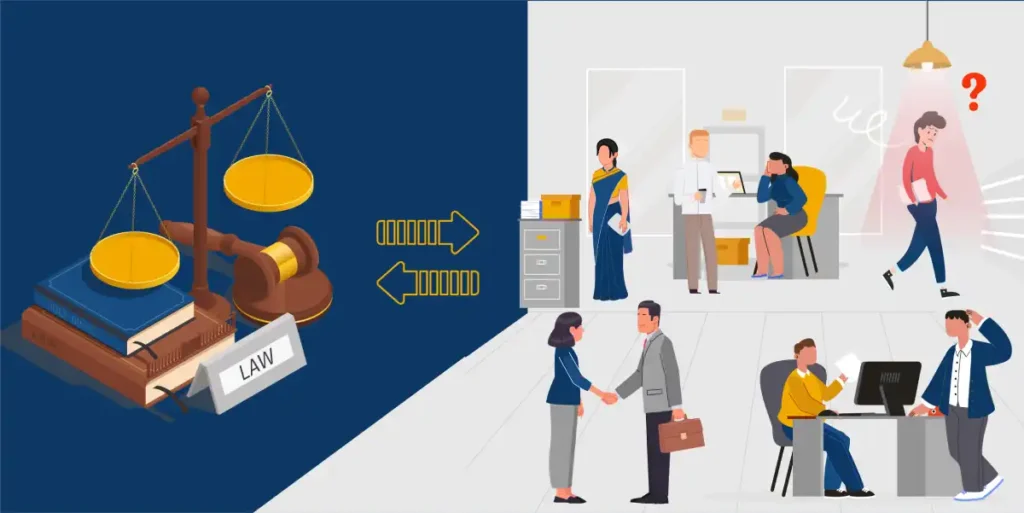
The verticals are not a product portfolio. They are a record of what we have learned and what workplaces need.
“The law was there, in black and white. What wasn’t there was anyone in the room explaining what a failed process actually does to a person. That gap is where Equilibrio Advisory started.”
Life at Equilibrio
We practise
what we preach.
We would have no credibility advising organisations on psychological safety, inclusive culture, and equitable workplaces if we did not work to build those things within our own team every day.
Equilibrio is a predominantly women-led firm, with representation from folx identifying as non-binary, colleagues whi have come out and spoken of their neurodivergence and whose lived experience is integral to our inclusion work.. Pronouns are stated and used. Associates have ERGs. The values we train organisations on respect, equity, psychological safety, honest communication are operationalised here, not just listed.
This is not a claim that we have it perfectly figured out. It is a commitment to staying accountable to the same standards we hold others to.
Equilibrio is a predominantly women-led firm, with representation from folx identifying as non-binary, colleagues whi have come out and spoken of their neurodivergence and whose lived experience is integral to our inclusion work.. Pronouns are stated and used. Associates have ERGs. The values we train organisations on respect, equity, psychological safety, honest communication are operationalised here, not just listed.
This is not a claim that we have it perfectly figured out. It is a commitment to staying accountable to the same standards we hold others to.
Respect
Every individual's dignity is non-negotiable, in every interaction.
Equity & Fairness
We advocate for justice inside the firm as actively as we do for clients.
Honesty
Transparent communication, including when it is uncomfortable.
Openness
Ideas and feedback move freely. Hierarchy does not silence contribution.
Collaboration
Diverse perspectives produce better outcomes. We are built on that belief.
Ownership
We take responsibility for our work and its impact, without exception.
10
YEARS OF PRACTICE - DECEMBER 2026
A decade of learning what it actually takes to build safe, equitable workplaces.
And still, every engagement teaches us something new.
CLIENT ORGANISATIONS
0
+
INDIVIDUALS TRAINED
0
+
COMPLAINTS HANDLED
0
+
Years Cumulative Experience
0
+
Work With Us
Ready to build something
that actually holds?
We work with organisations that want more than compliance those willing to do the harder, more lasting work of building cultures where everyone can participate fully.