

The Equilibrio Gazette
A brief buletin for building safe workspaces!
This weekly newsletter is your gateway to staying current on relevant laws (like POSH, POCSO, Transgender Persons Act, etc.) and the psychosocial intersections that impact the workplace.
18th September 2026 | Issue No. 151
Upcoming Events
Mark your calendars! In this section, we highlight an upcoming event you won't want to miss.
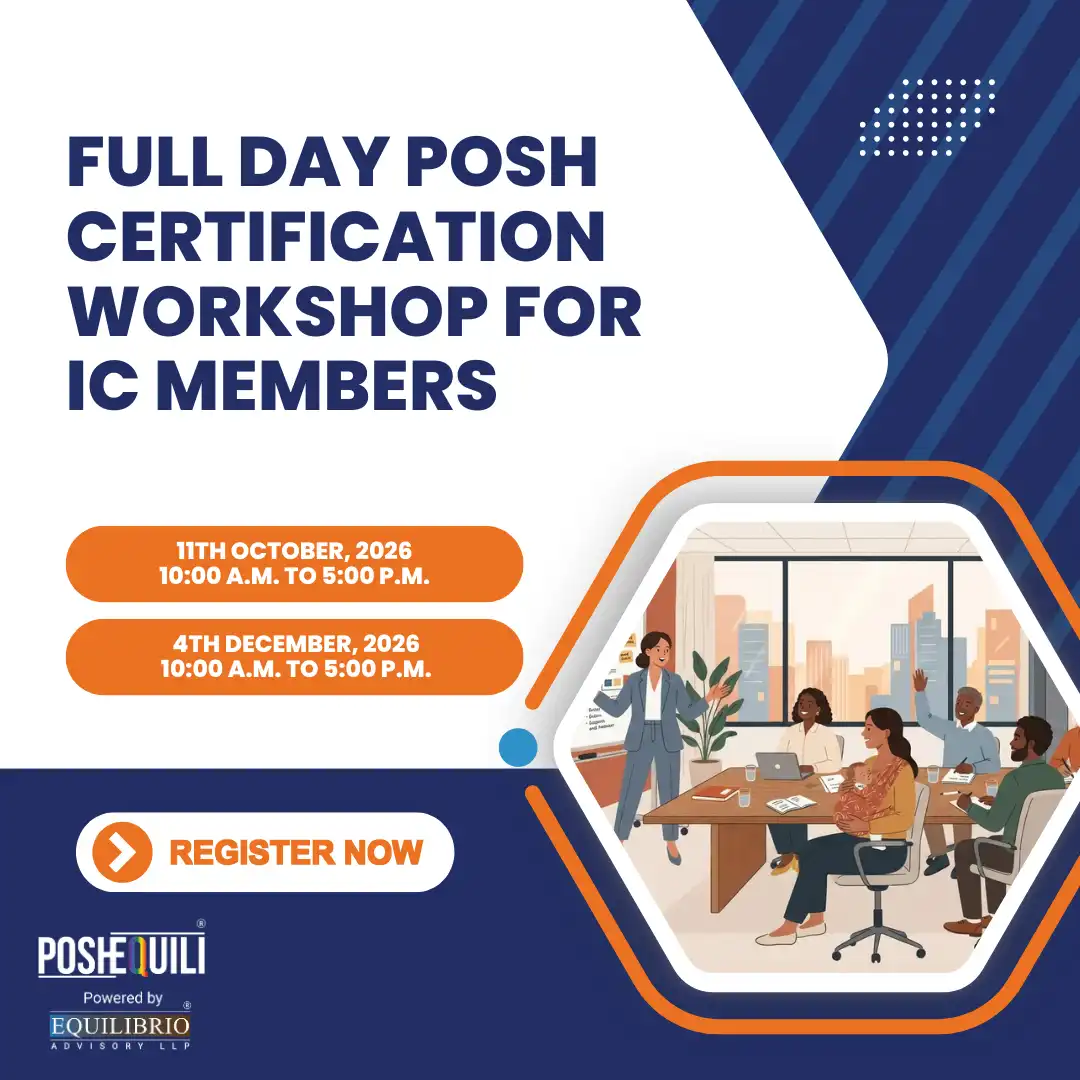
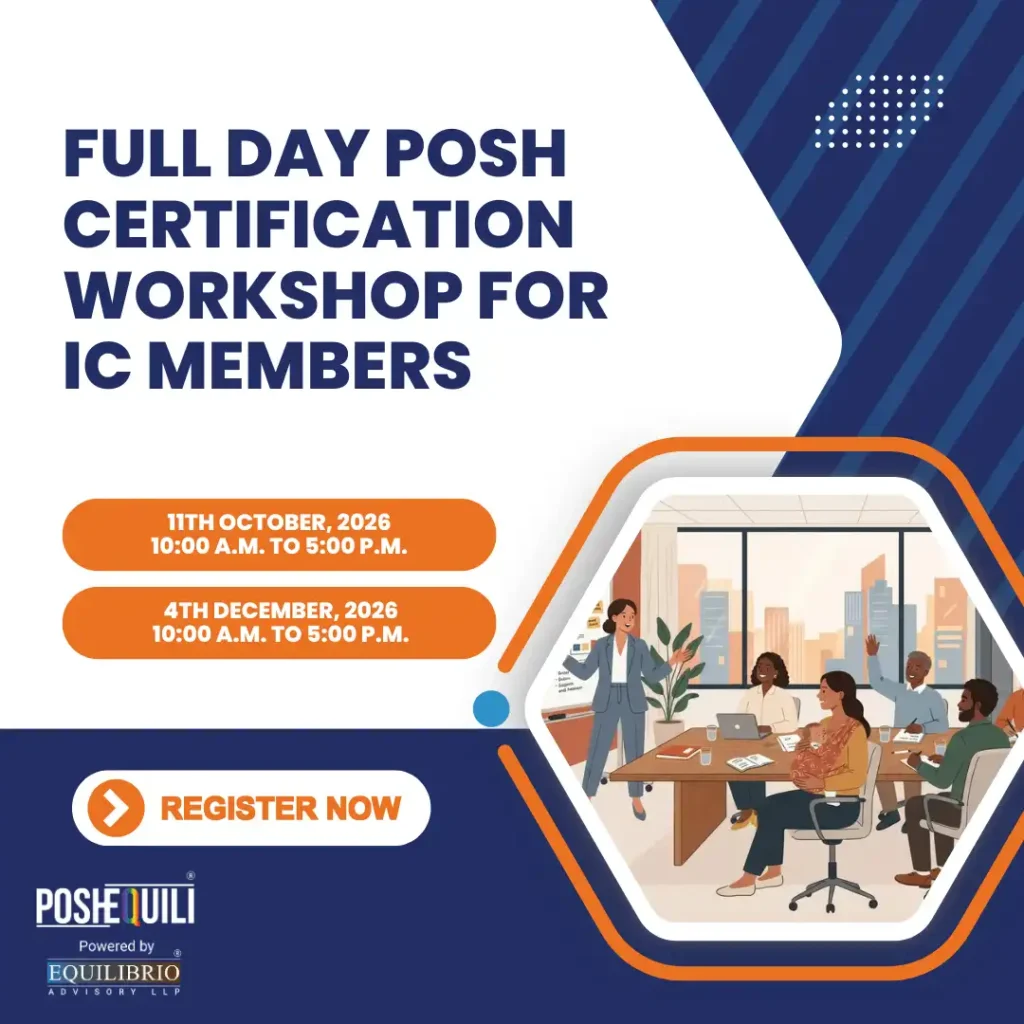
POSH Certification Workshop for IC Members- it’s here.
A workshop designed around what actually happens when a complaint lands on the table.
No evidence. Conflicting accounts. Digital conduct. Consensual relationships that turn contentious. Evidence that isn’t always straightforward.
These aren’t hypothetical situations. They’re the complexities ICs navigate in real complaints.
Go beyond understanding the law. Build the practical confidence to assess, question, document and navigate complaints with greater clarity.
In the Spotlight!
Explore ways to build your knowledge and capacity with our team of in-house experts!
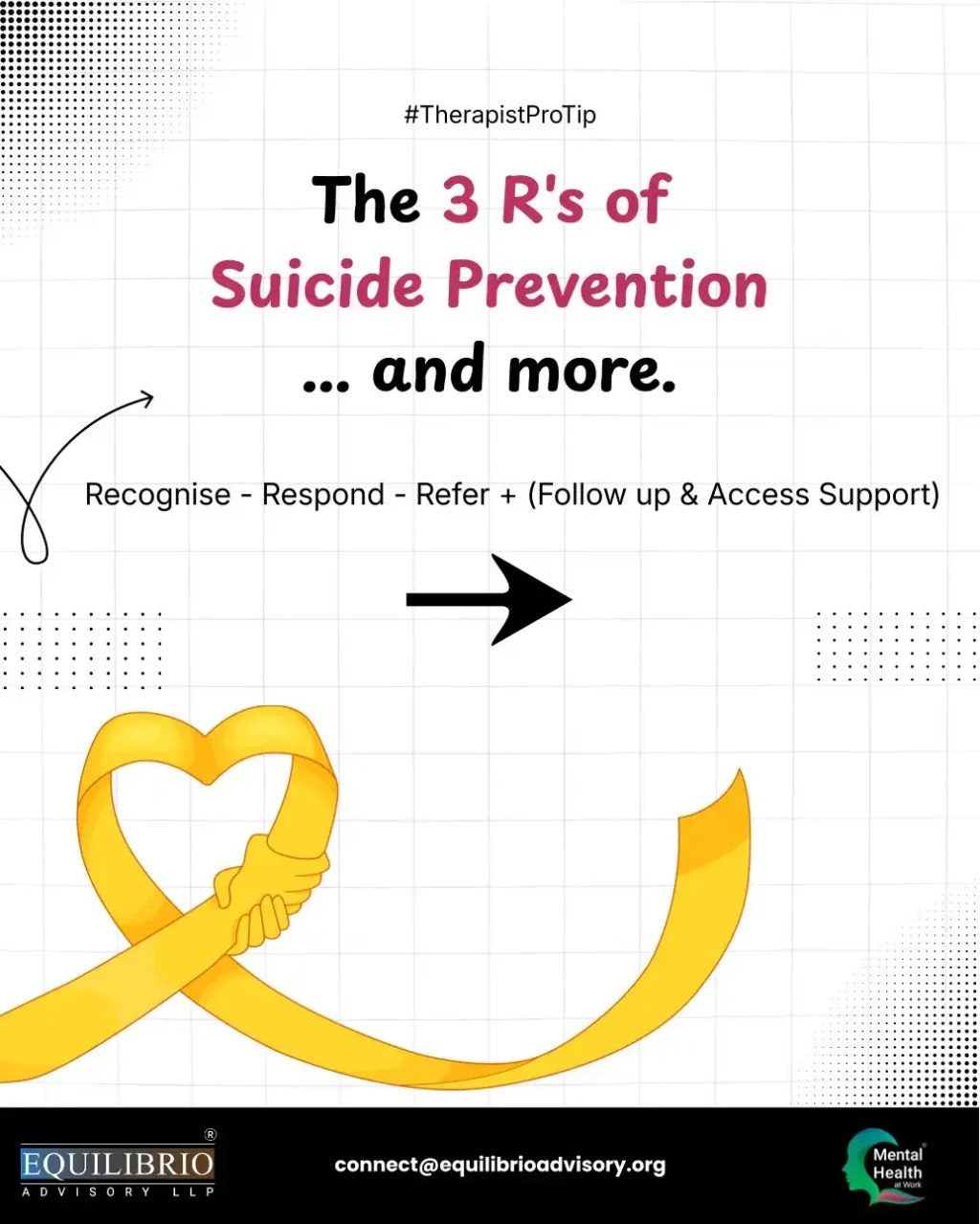
If someone tells you they’re not okay, stay.
You may not have the right words and that’s okay. Your presence matters.
Don’t leave, change the subject, or rush to fix things. Sometimes, simply staying with someone is the first step towards support.
A therapist’s pro tip, adapted from global suicide prevention best practices.
At Mental Health at Work, we provide therapeutic support and train individuals, managers, and organisations in crisis response and suicide prevention.
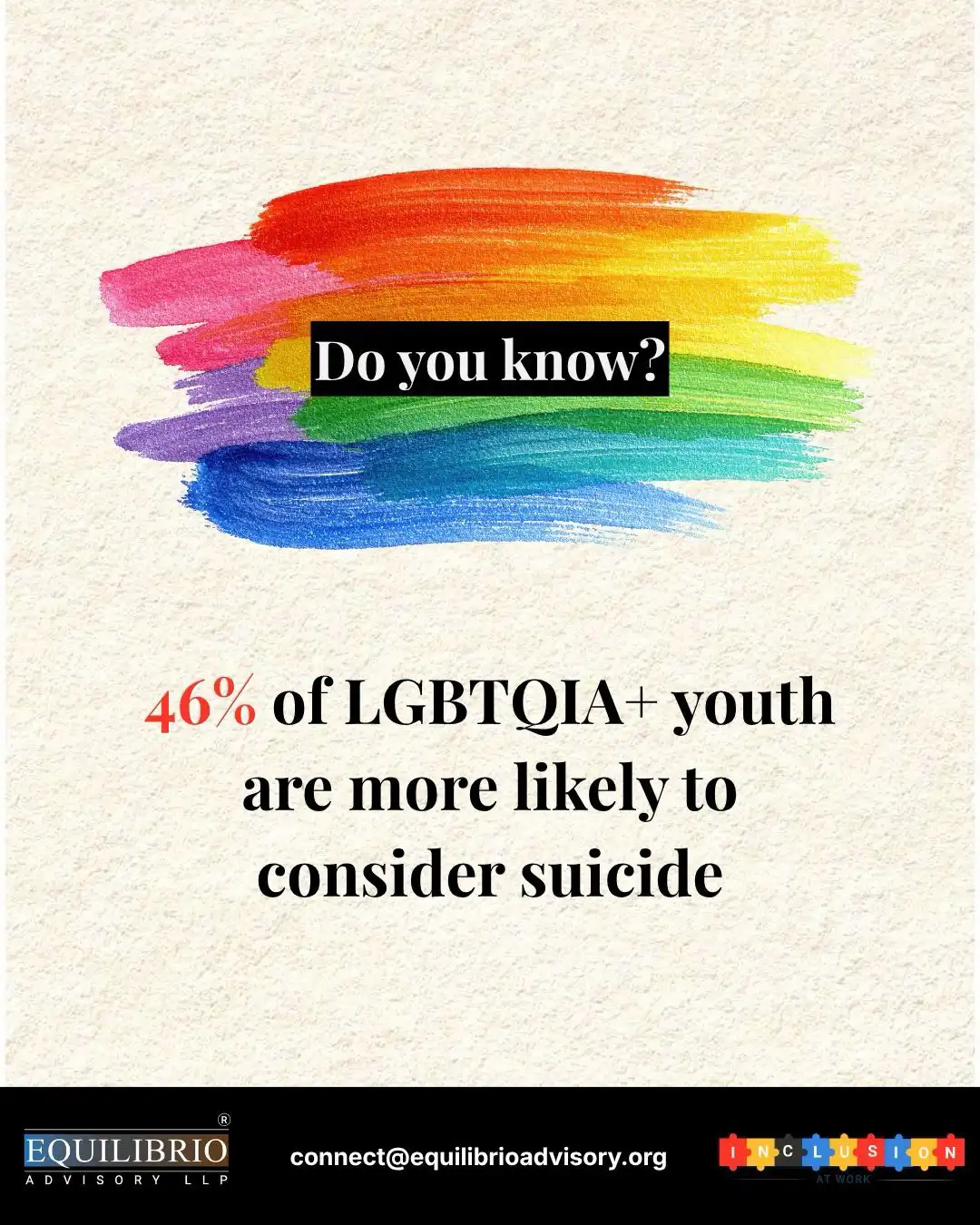
The Trevor Project reports that 46% of LGBTQIA+ youth aged 13–24 have seriously considered suicide, rising to 54% among transgender and nonbinary youth.
These disparities are not inherent to queer identities. They are shaped by systemic inequities, lack of validation, discrimination, and violence.
This Suicide Prevention Month, let’s commit to queer-affirmative practices across our homes, schools, and workplaces—creating spaces where every young person can not only exist, but thrive.
Ready to lead the change?
Reach out to Equilibrio Advisory LLP for queer-affirmative workplace trainings, awareness sessions, and legal support to address workplace queerphobia and transphobia.
Let’s build safer, more inclusive work cultures together.
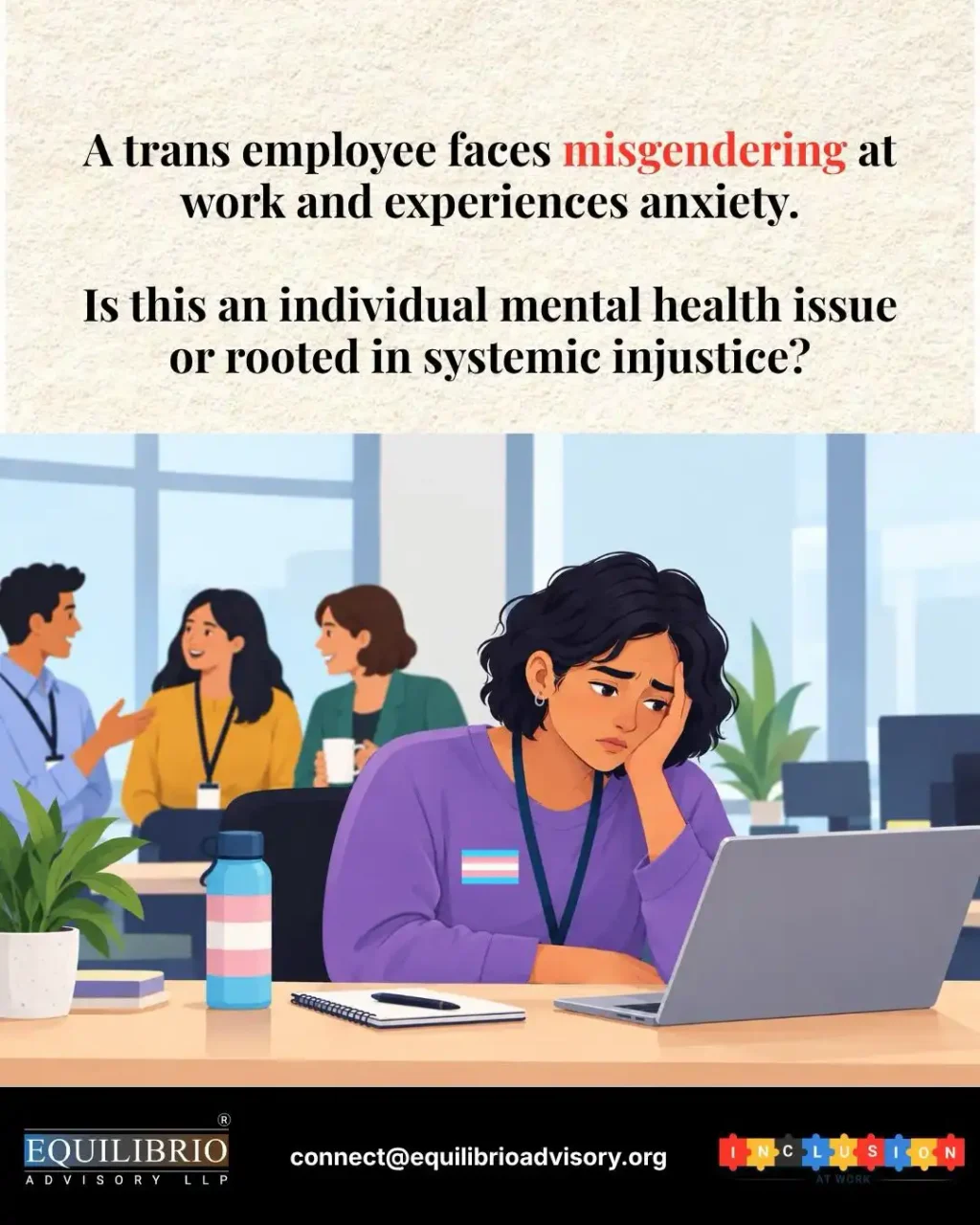
Burnout and anxiety aren’t always about an individual’s ability to cope. For a trans employee facing misgendering, distress can be rooted in systemic barriers that undermine safety and dignity. True well-being requires more than individual coping, it requires workplaces that address structural inequities and prioritise psychological safety for everyone.
Stay Current!
~ Spotlighting Landmark Judgments since passing of the Law!
I - LEGAL UPDATES
The Gauhati High Court upheld the conviction of the accused under the POCSO Act, observing that delay in reporting sexual assault must be assessed in light of the victim’s circumstances and trauma. The Court strongly deprecated the use of the two-finger/pre-vaginum test, reiterating that it has no scientific basis and violates the survivor’s privacy, dignity and bodily integrity. The Court also observed that the condition of the hymen cannot determine whether sexual assault occurred.

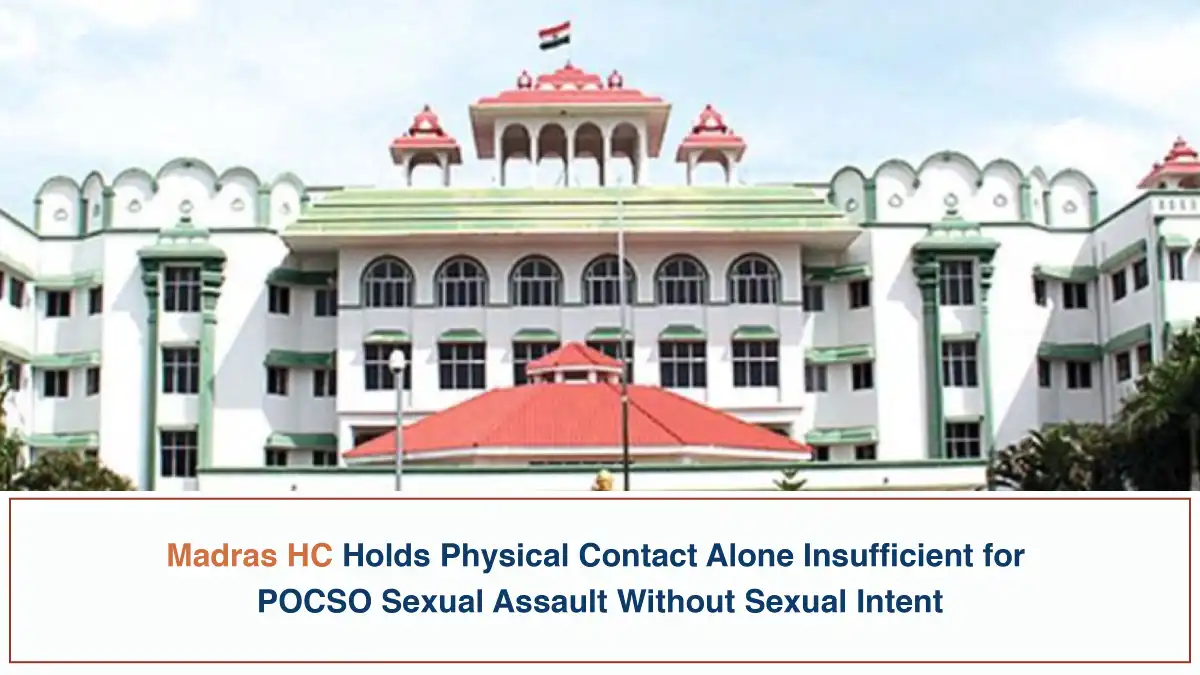
The Madras High Court held that physical contact with a child, by itself, does not constitute sexual assault under Section 7 of the POCSO Act unless accompanied by the requisite sexual intent. The Court emphasised that such intent must be determined from the surrounding circumstances. As the alleged contact involved briefly holding the victim’s hand and wiping her tears, without any sexual conduct or indication of sexual intent, the Court quashed the proceedings.
The Calcutta High Court reiterated that a minor’s consent to a sexual relationship does not constitute a defence under the POCSO Act once the statutory ingredients are established. Applying the presumption under Section 29, the Court found the prosecution evidence sufficient to sustain the conviction. While considering the Supreme Court’s recognition of a limited “Romeo-Juliet” approach in cases involving consensual relationships between adolescents, the Court declined to extend such relief in the present case, considering the victim’s subsequent marriage and child.

II - Exploring Intersections
Educational institutions have a legal and moral responsibility to protect every child’s safety, dignity, and well-being.
Strong safeguarding, clear reporting mechanisms, and timely action are essential.
Build stronger awareness around POCSO, child protection, safeguarding, reporting responsibilities, and legal compliance.
For support: connect@equilibrioadvisory.org
Engage with us!
Here's your weekly food for thought through a Fun Fact or Quiz.
Did you know that Sydney Sweeney’s recent advertisement for the brand Novig is sparking intense backlash, for relying on sexualized imagery of female athletes instead of looking at their performance? Many observers argue that this is a symptom of the “rage economy,” where brands deliberately court controversy to capture attention.
However, this marketing choice feels particularly regressive when contrasted with the European Broadcasting Union and European Athletics’ recent initiative, “Raising the Bar.” These new guidelines were developed with input from elite female Olympians to ensure media coverage focuses on athletic skill rather than sexualized camera angles or editorial framing. By prioritizing respectful representation, these guidelines offer a blueprint for dismantling the objectification that has long plagued women’s sports.

Have a burning question about POSH? Maybe Mental Health at Work, Child safety or DEI&B strategies? Drop us an email with your query and we would love to answer it, in all seriousness.
Curious Cat:
What is postpartum psychosis, and why does the public discourse surrounding it demand a shift toward radical empathy?
Answer:
Postpartum psychosis is a rare but severe medical emergency characterized by extreme confusion, hallucinations, and delusions following childbirth. It can also manifest as terrifying intrusive thoughts about causing harm to one’s own child; a symptom often considered tabboo due to society’s one-note portrayal of maternal perfection.
The trial of Lindsay Clancy highlights how mothers frequently suffer in isolation, terrified by a society that mandates an idealized, flawless version of motherhood. This intense cultural pressure creates a “shame trap”. When mothers struggle or experience intrusive thoughts, they fear that admitting to these challenges will lead to judgment, loss of custody, or social ostracization.
Addressing this crisis requires more than just therapeutic intervention; it necessitates a cultural dismantling of the shame surrounding mothers who are grappling with their mental health or otherwise. We must move toward systemic support that allows mothers to voice their struggles without fear of collective societal judgement, ensuring that seeking help for a mental health crisis is met with care rather than condemnation.

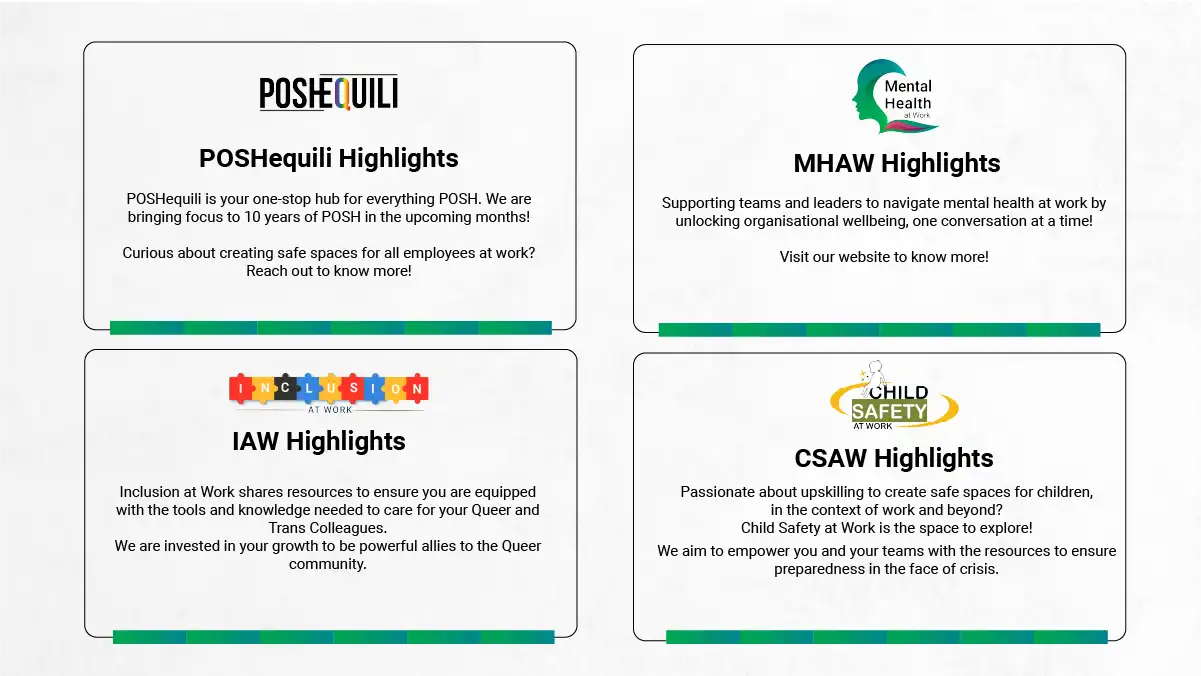
Here’s all the tools you need to build safe and equitable workspaces!
Drop us a Hey, to get started!